
Being Presence, Not Proof
There is a question that arrives quietly, like the silence of snow falling softly—
not asking for an answer, only seeking to be noticed:
How do we give to ourselves what appears to be missing in our lives?
We are often told to act as if we already have it.
But the mind has other plans.
The mind wants an inventory.
A cause.
A correction.
It wants to set out on an expedition and search for the real.
When the Search Has Already Done Its Work
But what if the search has already done its work?
What if nothing more needs to be proven, explained, or recovered—because what we exiled in our youth has already returned?
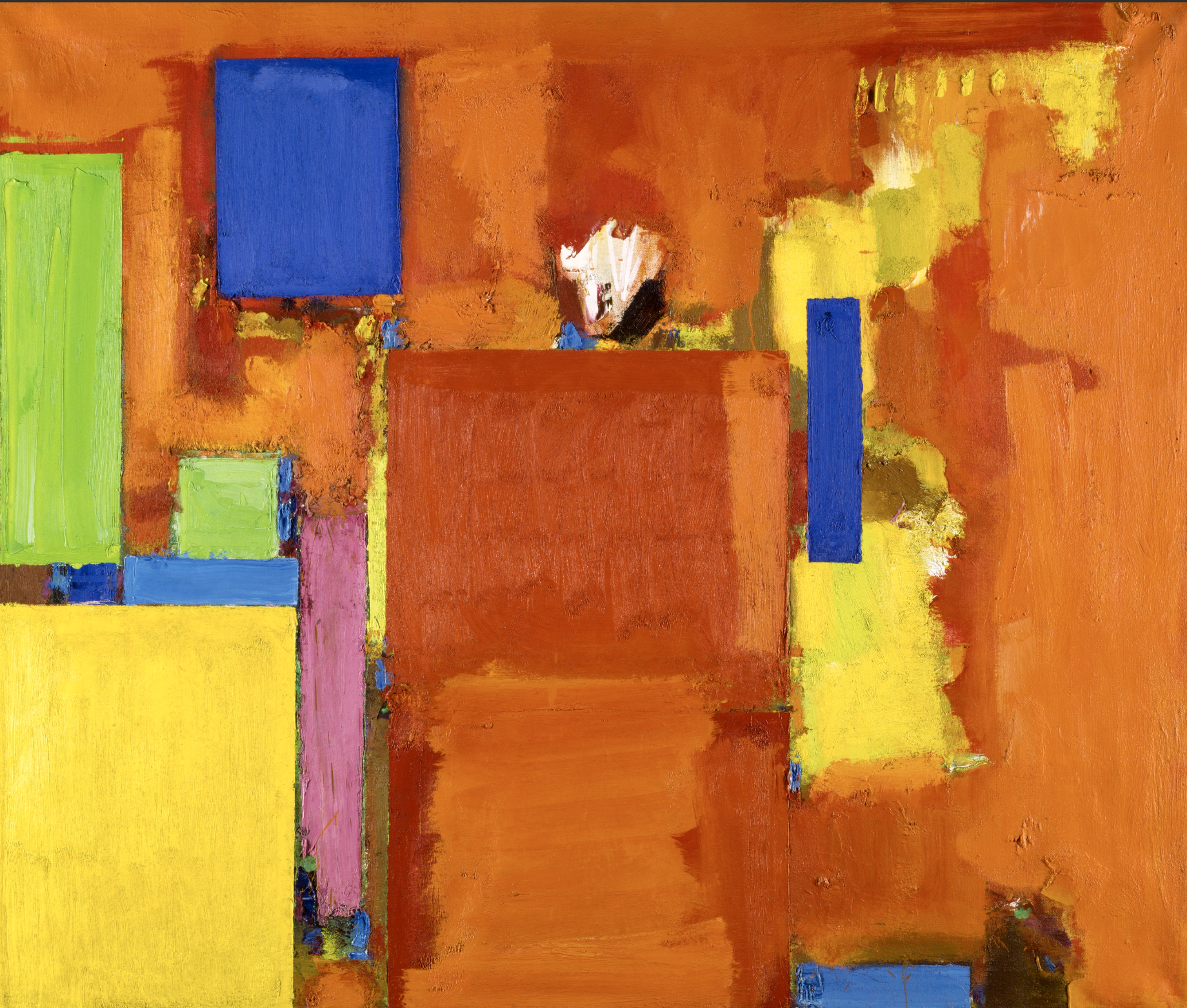
As the modern painter and teacher Hans Hofmann once pointed out in his essay The Search for the Real, the real is not an appearance to imitate, but an aliveness to enter. And once entered, it does not require commentary. It continues to emerge effortlessly from within.
Why We Begin Searching
At first, we search because we are wounded.
We leak energy. Enthusiasm. Innocence.
Pieces of ourselves scatter at moments of rupture—childhood hurts, betrayals, moments when staying whole felt impossible. The search begins as a form of healing, a way of calling back what was disembodied.
When Healing Completes
But there comes a moment when the healing is complete, and the soul returns to re-inform the body of its sacredness.
Not as a memory.
Not as a story.
But as a felt, embodied knowing.
The psyche may still ask, Did I get it back?
But the body already knows.
This is where many linger too long—trying to explain what happened, revisiting the wound, sharpening the language of healing, narrating the return as if it might disappear without supervision.
Yet the invitation now is different.
The Museum Moment
Have you ever been in a museum where celebrated art lives—walked into a quiet gallery and felt a single piece draw you in, almost without effort? You stand there, unsure why this piece and not another, until something subtle shifts. And you realize the work is not giving you meaning so much as meeting you at the depth you are willing to offer.
It is an exchange, not a transaction.
Nothing needs to be explained.
You don’t defend the experience.
You simply stand there, changed.
This is the power of art.
This is the power of the creative force.
What the Mind Keeps Alive
The truth is actually very simple—though it can feel unsettling compared to the stories the mind creates to keep the search alive. Those stories loop endlessly, preventing us from crossing the quiet threshold into the essence of the Self, into the interior divine.
Nothing is missing.
Nothing was ever broken.
You are complete. Sacred. Whole.
You always have been.
And still, absence may be remembered.
Not because something failed to return,
but because the mind has not yet relinquished its role as narrator.
How We Learned to Step Away
Through experience—through love misunderstood and treated as an intellectual exercise rather than a felt, embodied reality—through the soft violence of domestication, and through trauma we could not process in real time, we learned to step away from ourselves.
Not because anything in us was wrong,
but because what was most alive felt too vulnerable to keep present.
We set aside the radiant parts.
The open-heartedness.
The unconditionally loving.
The parts that felt deeply, trusted intimacy, and spoke with complete honesty.
We performed these as noble acts to preserve the sacred.
But noble acts that require self-abandonment are transactional.
And slowly, we fracture.
Presence Is Not Physical
Along the way, we also learned to mistake presence as something merely physical, not energetic. We reduced it to being seen, being located, being observable—rather than felt, transmitted, alive.
In doing so, we dimmed our charisma.
We hid our seductive nature.
We learned to manage life instead of inhabiting it.
Completion, Not Recovery
But here is the complete truth:
🌿 At some point, the wounds have been healed.
🌟 The soul has already returned.
🧘 The body puts this truth on full display.
🗡️ The mind is no longer required to prove it.
This is the transition from recovery to wholeness.
From explaining to living.
From defending to inhabiting.
From narrating to being.
Allowing What Is Already Here
So what we once called “missing” no longer needs to be sought.
It does not need to be protected with language or revisited through pain.
This is why giving to yourself is not an act of receiving.
It is the highest, noblest act of allowing—
allowing what appeared missing to emerge in its full glory.
Giving to yourself is the moment the sacred Self emerges from within.
Receiving is the act of integration—where that emergence is lived, without commentary, inside the Whole.
Eden Is a State of Being
This is where the path ends.
And life begins.
The mind may still try to scan, to question, to re-enter the story.
But you are no longer meant to explain what happened.
You are not meant to revisit the wound.
You are not meant to sharpen your healing into language.
The Garden of Eden is not a place or an idea.
It is a state of being that does not argue for itself.
It walks.
It breathes.
It loves.
It creates from love.
And it does not look back to see if it is whole.
An Invitation to Live
This week, notice where narration is replaced by silence.
Notice where you allow and stop defending.
Notice where life begins to move without explanation.
Stay there.
With it.
As it.
Nothing is missing.
Nothing is ending.
Something is being lived.
Let silence replace explanation
Let presence replace clarity
Let life demonstrate what the mind no longer needs to say
SPECIAL PRIVATE SESSION OFFER UNTIL FEBRUARY 17, 2026.
CLICK HERE AND USE "FIREHORSE" TO ACTIVATE THE OFFER.
IMAGE--HANS HOFMANN "THE GOLDEN ROOM"
Recent Comments